--------------
Sometimes, if you stand on the bottom rail of a bridge and lean over to
watch the river slipping slowly away beneath you, you will suddenly
know everything there is to be known.
~Winnie-the-Pooh
--------------
"How do you do Nothing?" asked Pooh.
"Well, it's when people call out at you just as you're going off to do it
What are you going to do, Christopher Robin?' and you say,
`Oh, nothing' and then you go and do it. It means just going along,
listening to all the things you can't hear, and not bothering."
--------------
"Rabbit's clever," said Pooh thoughtfully.
"Yes," said Piglet, "Rabbit's clever."Piglet
"And he has Brain."
"Yes," said Piglet, "Rabbit has Brain."
There was a long silence.
"I suppose," said Pooh, "that that's why he never understands anything."
---------------
"The atmospheric conditions have been very unfavourable lately," said Owl.
"The what?"
"It has been raining," explained Owl.
"Yes," said Christopher Robin. "It has."
"The flood-level has reached an unprecedented height."
"The who?"
"There's a lot of water about," explained Owl
--------------
Poetry and Hums aren't things which you get, they're things which get you.
And all you can do is to go where they can find you.
~Winnie-the-Pooh
--------------
Lots of people talk to animals. Not that many listen though. That's the problem.
~Winnie-the-Pooh
--------------
They're funny things, accidents. You never have them till you're having them.
~Eeyore
--------------
Before beginning a Hunt, it is wise to ask someone what you are
looking for before you begin looking for it.
~Winnie-the-Pooh
--------------
Rivers know this: There is no hurry. We shall get there one day.
~Winnie-the-Pooh
--------------
"It's a funny thing about Tiggers," whispered Tigger to Roo,
"how Tiggers never get lost."
"Why don't they, Tigger?"
"They just don't," explained Tigger. "That's how it is."
--------------
"I don't see much sense in that," said Rabbit.
"No," said Pooh humbly, "there isn't. But there was going to be
when I began it. It's just that something happened to it along the way."
--------------
“Don't underestimate the value of Doing Nothing,
of just going along, listening to all the things you can't hear.”
- Winnie the pooh
--------------

Tuesday, March 13, 2012


Sunday, February 26, 2012
inspiration
A re-post from 2011
Today I just woke up, and went out to see how the weather was. It wasn't sunny at all, it was actually grey and raining. But after standing outside for a while, I could hear the birds chirping in the trees and fluttering around the house. I was surpr ised to see how this moved me, so much that I started to cry a bit. I had no idea how I have been longing for spring. And just this little preview of it made my eyes water with emotion.
"Even if blame seems more than justified, as long as you blame others, you keep feeding your pain and get trapped in your own ego. There is only one perpatrator of evil on the planet - human unconsciousness. That realisation is true forgivness. With forgiveness your victim identity dissolves, and your true power emerges - the power of Presence. Instead of blaming the darkness, you bring in the light."
- Echart Tolle
Today I just woke up, and went out to see how the weather was. It wasn't sunny at all, it was actually grey and raining. But after standing outside for a while, I could hear the birds chirping in the trees and fluttering around the house. I was surpr
ised to see how this moved me, so much that I started to cry a bit. I had no idea how I have been longing for spring. And just this little preview of it made my eyes water with emotion.
There is something very special about spring. the time in year that comes after we have spent so long in cold and darkness. Spring is like a new hope,- snow melting to unveil flowers, a smile after sadness, seeing your loved ones after a long journey away, and I think that was also what touched me. I felt this new hope in my chest too - all the feelings that had been hid by the darkness of winter bubbling up and wanting to bee seen and acknowledged again,- to be set free and live. Spring is like falling in love. It melts the ice and old hurt from your heart and turns you to light and warmth.
I have never liked to favor anything, cause I don't like to treat things differently, (like they have different value). But in this case I must make an exception. Spring with all its signs of hope is definitely my favorite season.
I honestly think that if people just got some sun and hugs every day, the world would look very different :-)
Here is a beautiful song to enjoy while you are sitting in the sun
"Even if blame seems more than justified, as long as you blame others, you keep feeding your pain and get trapped in your own ego. There is only one perpatrator of evil on the planet - human unconsciousness. That realisation is true forgivness. With forgiveness your victim identity dissolves, and your true power emerges - the power of Presence. Instead of blaming the darkness, you bring in the light."
- Echart Tolle
Sunday, February 19, 2012
When love turns painful
Does love never work out for you or really last? Are you tired of the failed relationships but dont understand why they never work out? Do you want to connect with someone but at the same time feel ambivalence about it...maybe a feeling that they will take your freedom away or try to control you? Or do you always feel that those you love stay at a distance from you, that you never can get a truly satisfying relationship where your need for love and attention is met equally with what you yourself give out?
-Am I a Love Avoidant?
-What Does the Love Avoidance Relational Cycle Look Like?
Vulnerability and gentleness
Emotions and personal growth
Fear of true intimacy and being seen for who you really are at the core
Intimicy anorexia
The dance of the vounded souls
Co-dependency (Or the difference in being responsible for others and being responsible to others)
The Casanova complex
The high flyer
The Phantom / The Dracul / The shadow
Manipulative peopleFreud's Psychosexual Stages of Development
Personal blog: A typical example of love avoidance behavoir
If you answer yes to any of these questions I think this artickle might be valuable to you...
Love addiction and love avoidance
- the dance of the vounded souls
Content of artickle:
Love Addiction
-What is Love Addiction?
-Am I a Love Addict?
-What Does the Love Addiction Relational Cycle Look Like?
Love addiction and love avoidance
- the dance of the vounded souls
Content of artickle:
Love Addiction
-What is Love Addiction?
-Am I a Love Addict?
-What Does the Love Addiction Relational Cycle Look Like?
Love Avoidance
-What is Love Avoidance?-Am I a Love Avoidant?
-What Does the Love Avoidance Relational Cycle Look Like?
What is Love Addiction?
 Love addicts have unmet emotional needs that they seek to fulfill with either romance or relationships. Love addicts tend to form relationships with individuals who are love avoidant. Love avoidants gain a sense of relationship control by avoiding intimacy and withholding love. Together, love avoidants and love addicts engage in a dysfunctional relationship pattern that is often called the 'distancer-pursuer' relationship. Because the love addict's primary emotional fear is of abandonment, she or he is typically the pursuer in an established relationship. The love avoidant, whose primary fear is of intimacy, responds by distancing.
Both love addicts and love avoidants also have secondary fears (the love addict's secondary fear is of intimacy; the love avoidant's secondary fear is of abandonment), which fuel temporary periods of role reversal in the distancer-pursuer pattern when those secondary fears are triggered. However, regardless of who is the distancer and who is the pursuer at any given time, the pattern in the relationship remains the same.
Am I a Love Addict?
This questionnaire is based on the work of Pia Mellody. If you can answer yes to more than a few of the following questions, love addiction may be a problem for you.
- Your partner seemed too good or perfect to be true when you first met.
- He or she seemed like the person you had always dreamed of.
- Your partner seemed unusually charming and thoughtful when you first met, almost as if he or she could read your mind.
- Within days of meeting your partner you felt like the two of you had been spiritually connected for years.
- You were convinced you and your new partner were 'soul mates.'?
- Your partner's interests and hobbies seem more important to him or her than you are.
- You've started cutting activities and people out of your life because you don't want to make your partner jealous.
- You have been so obsessed with another person before that you gave up everything (e.g., job, friends, family, etc.) to be with that person.
- You have put your partner on a pedestal before.
- Your partner went from being romantic to cold and distant.
- You have said to friends before, 'He/She was so charming and thoughtful in the beginning; I don't understand why he/she changed'?
- You have tried unsuccessfully to be romantic and make things like they were in the beginning.
- Your partner seems to spend less and less time with you.
- You have been with a partner who was verbally or physically abusive.
- You have blamed yourself or made excuses for your partner's abuse.
- After long periods of unhappiness and progressively worse abuse, you still hang onto the belief that one day things will change.
- You believe if you just hang in there long enough, you can love your partner into being who he or she really is.
- You have been asked by a family member or close friend why you stay.
- You feel abandoned when a relationship breaks up, even if you were the one who ended the relationship.
- You have been in so much pain after an unhappy, troubled relationship has ended that you go back when your partner promises to change.
- After a relationship has ended, your feelings of abandonment, pain, and fear seem so severe that you think you might die.
- When you were a child, you often felt as though you were invisible.
- A parent or major caregiver died, moved away or got divorced when you were a child.
- As a child, you thought your parents or major caregivers didn't really know what was happening to you or what was going on inside of you.
- You feel like your father neglected and/or abandoned you during your childhood.
- You feel like your mother neglected and/or abandoned you during your childhood.
You can learn more about different types of love addiction from Love Addicts Anonymous.
What Does the Love Addiction Relational Cycle Look Like?
 The love addict:
- Is attracted to a person who is walled in and appears powerful.
- Creates a fantasy about the other person as the relationship begins. The fantasy leads to feelings of euphoria for the love addict, who then becomes obsessed with the partner.
- Uses denial to protect the fantasy. This allows the love addict to ignore the avoidant's walls and the distance in the relationship.
- Some event occurs that bursts the denial and results in the love addict going into emotional withdrawal from the fantasy.
- Uses strategies to either return to the fantasy, medicates the emotional distress and/or becomes obsessed with revenge.
- Returns to the fantasy or finds a replacement partner and creates a new fantasy.
The Relational Recovery: Healing from Sex, Love and Relationship Trauma Group offers a healing community for women hurt by love addiction.
What is Love Avoidance?
Love avoidance is the systematic putting up of walls in a relationship to prevent feeling emotionally overwhelmed by another person. Consequently, it prevents true intimacy. It can be described as a form of emotional anorexia. The love avoidant perceives love as being an obligation or duty, so relationships are experienced as an emotional drain. The love avoidant tends to become involved with love addicts, and puts up walls to decrease the intensity within the relationship. However, the more the avoidant distances, the more the love addict pursues. The avoidant often responds by a pattern of deprivation within the primary relationship, while acting in ways that create intensity outside of that relationship (e.g., work, pursuing other relationships or sexual encounters, addictions, etc.). At the more extreme range of love avoidance, the love avoidant may also be intimacy anorexic.
Am I a Love Avoidant?
 This questionnaire is based on the work of Pia Mellody. If you can answer yes to more than a few of the following questions, love avoidance may be a problem for you.
- You think taking care of your partner is sufficient proof that you love him or her.
- You find yourself often critical of your partner.
- You believe it is your duty to take care of your partner.
- You have a secret life away from your partner.
- You keep important information about your thoughts or feelings from your partner.
- You withhold information about yourself (at work or play) so that your partner will not get upset.
- You find yourself needing to manage and be in control of the relationship.
- You have frequently done things for your partner and then later had the sense that no matter what you did it was never enough for your partner.
- You feel frustrated because your partner doesn't understand that you've spent time with him or her and now you need time for yourself.
- You feel smothered by your partner when he or she wants to have you around so much.
- Your partner complains that he or she doesn't really know you.
- You find yourself overly critical of your partner.
- You withhold praise or appreciation from your partner.
- You feel resentful of your partner's neediness.
- You have had one or more relationships in which you felt smothered and needed to escape.
- You find yourself needing to control your partner because you know better what should and shouldn't be done.
- You control your primary relationship by silence and anger.
- When you're with your partner you feel like you're not getting your needs met.
- You feel your partner doesn't appreciate all that you do for him or her.
- You frequently feel the need to escape the relationship.
- You often feel the need to go some place where you can get attention without always having to assure the other person that you love them.
- You are spending more time at work in order to be away from you partner.
- You stay so busy that you have little to no relational time for your partner.
- You feel a sense of relief when you leave the house.
- Your drinking, drug use, or other addictive behaviors increase while you are in a primary relationship.
- You've had an affair or one-night-stand in order to get away from your relationship, have some fun, and get some attention.
- You use porn to escape from the pressure in your relationship.
- You withhold sex from your partner.
- You have become involved in relationships because you couldn't say "no" or you didn't want to hurt the other person's feelings.
- You have stayed in relationships longer than you wanted because you would have felt guilty if you ended it.
- Your relationships have often begun with you rescuing your partner from another bad relationship, poor health, financial difficulties, emotional distress, legal problems or some other difficulty.
- It is important to you that your partner thinks of you as her 'Knight in Shining Armor' or his 'Wonder Woman.'
- As a child, you sometimes thought you were taking care of mom or dad more than they were parenting you.
- As a child, you felt like mom or dad was smothering.
What Does the Love Avoidance Relational Cycle Look Like?
The love avoidant:
- Feels compelled to take care of needy people.
- Hides behind a wall of seduction or romance to satisfy the needs of relationship partner while avoiding being vulnerable or feeling controlled.
- Begins to resent the other person he or she feels duty bound to take care of and moves behind a wall of anger.
- Communicates anger in either a passive-aggressive or overtly aggressive way. Uses anger to justify a break fro
 m relationship duties.
 - Sees self as a victim of relationship partner and rationalizes seeking intensity outside of primary relationship (e.g., overworking, drugs or alcohol, compulsive eating, sexually acting out, financial risk taking, thrill seeking, etc.).
- Either returns to relationship out of guilt or fear of abandonment, or finds a replacement relationship.

LINKS:
Vulnerability and gentleness
Emotions and personal growth
Fear of true intimacy and being seen for who you really are at the core
Intimicy anorexia
The dance of the vounded souls
Co-dependency (Or the difference in being responsible for others and being responsible to others)
The Casanova complex
The high flyer
The Phantom / The Dracul / The shadow
Manipulative peopleFreud's Psychosexual Stages of Development
Personal blog: A typical example of love avoidance behavoir
Vulnerability and gentleness
"I praise what is truly alive
what longs to be burned to death
And so long as you haven`t experienced
this: to die and so to grow,
you are only a troubeled guest
on this dark earth"
- Goethe
- A text about personal transformation, and relating to others. How can gentleness and feeling pain really be a powerful strength?
When we first open to our pain, it often feels as though we are bleeding. yet this kind of emotinal bleeding helps awaken the heart, allowing vital energies in us that have become coagulated to circle again. To let our pain move in this healing way requires awareness, courage, and gentleness--being present with the pain instead of believing scare stories in our mind about where it might take us, opening ourselves to the place where we hurt inside, bringing caring presence to it, and letting those we love see it as well. In this way, helping us connect with our warrior spirit, pain can become a friend and ally.
A close friend, Tracy, has told me about some of her struggles, and transformation, relating to exactly these issues, and her partner Mark. She had a long time been feeling very resentful about her partner, but during a process where she allowed her pain about it to flow, finally accepted the situation. Thus when she felt her disappointment that Mark wasn't everything she would like him to be, and let this touch her, she realized, and expressed;
"We each have differences and im perfections that hurt each other. Yet there is nothing wrong with feeling that pain. it makes me feel my heart`s blood--my openness to myself, to him, and to love itself." In proclaiming her vulnerability this way, she was stepping beyond her fear of pain and heartbreak.
what longs to be burned to death
And so long as you haven`t experienced
this: to die and so to grow,
you are only a troubeled guest
on this dark earth"
- Goethe
- A text about personal transformation, and relating to others. How can gentleness and feeling pain really be a powerful strength?
When we first open to our pain, it often feels as though we are bleeding. yet this kind of emotinal bleeding helps awaken the heart, allowing vital energies in us that have become coagulated to circle again. To let our pain move in this healing way requires awareness, courage, and gentleness--being present with the pain instead of believing scare stories in our mind about where it might take us, opening ourselves to the place where we hurt inside, bringing caring presence to it, and letting those we love see it as well. In this way, helping us connect with our warrior spirit, pain can become a friend and ally.
A close friend, Tracy, has told me about some of her struggles, and transformation, relating to exactly these issues, and her partner Mark. She had a long time been feeling very resentful about her partner, but during a process where she allowed her pain about it to flow, finally accepted the situation. Thus when she felt her disappointment that Mark wasn't everything she would like him to be, and let this touch her, she realized, and expressed;
"We each have differences and im
 perfections that hurt each other. Yet there is nothing wrong with feeling that pain. it makes me feel my heart`s blood--my openness to myself, to him, and to love itself." In proclaiming her vulnerability this way, she was stepping beyond her fear of pain and heartbreak.
Unfortunately, the word vulnerability has pejorative meaning in our culture. Associating it with weakness and powerlessness, we often think of a vulnerable person as someone who is overly sensitive to being hurt or offended. Yet sensitivity to offense is something quite different from the genuine vulnerability of letting our heart be exposed. The ego is always fragile and easily wounded. It is a brittle shell or facade, a pretense that "we are in charge", that "no one can get to us" that we are "captains of our own fate". It is fragile because life is always threatening to expose our pretense of having power over life. By contrast, acknowledging our basic, human vulnerability--our openness to reality--is a source of real power. In fearlessly allowing our-selves to be vulnerable, we embody the bravery and gentleness of a true warrior.
Tracy confessed and described, that always before, she had tried to make her partners meet her emotional needs in devious, indirect ways. She would avoid stating he real feelings and needs openly because she did not like to feel exposed. It was much safer to manipulate her partner into blaming him when he failed to do so, or just withdraw.
In every relationship, there are times when one partner wants to connect more deeply, but that other is not as emotionally available at the same moment. At first when Tracy experienced this with Mark, she would feel hurt, and then contract, protect herself, attack, or hold it against him. Then, as her hurt and resentment built up, she would start to think about leaving him. Yet in learning to be compassionate toward the vulnerable part of herself, where she felt hurt by Mark`s unavailability, Tracy could let these hard, defensive edges fall away. When she softened to her pain, she could simply tell Mark about it, instead of holding it against him or shutting down her love. Expressing her needs more openly, rather than manipulating or accusing him, allowed her love to keep flowing. And she expressed that she felt stronger: no longer did she have to live in fear of pain or feel victimized when she got hurt. In this way, thorough making friends with our vulnerability, we discover a new kind of flexibility and power.
We usually think of vulnerability and gentleness as the opposite of power. Yet the softening that happens when we work with our pain can be quite compelling and influential. We become like water, which can generate electric power precisely because it flows so willingly, without resisting gravity or the contours of the land. Water is extremely vulnerable, in a sense. It is soft, it does not resist the touch, it can be molded into any shape, and it receives whatever we put into it. Yet for wearing down what is hard and tough, nothing surpasses it. Just as water, which is so soft, and accommodating, can reduce the hardest of rocks to sand, similarly gentleness is one of the most irresistible human qualities and can penetrate even the hardest of hearts. Whereas hardness stirs up aggres sion, gentleness provides nothing to resist.
So when Tracy show her vulnerability by saying, "I want to feel close to you right now", or "I just need to feel your love", Mark could not resist her. Because she was so appealing at the moment, he would often want to put aside his self-involvement and give her what she asked for. And when she could expose her pain-"It really hurts me when you get so tight"-instead of trying to get him to change, this usally made him soften. No longer was she the fussy princess expecting him to be a perfect prince.
In learning to appreciate and trust her broken-open heart Tracy says she felt more connected with life than ever before, and more capable of handling the challenges of an ongoing relationship. This was a tremendous victory, which only made her stronger and more attractive.
Men can particularly have a hard time seeing that their willingness to be vulnerable is often what touches women the most. They imagine that it is a sign of weakness, and that it will lead to scorn or rejection, or that they will loose control and disappear in the feeling. However, as one woman friend of mine put it,"I find it quite magnetic, when a man lets me see his vulnerability. It only turns me off if he tries to get me to reassure him about feeling that way. If he just presents it openly, I find that courageous and admire him for it." What she is saying is that ego fragility-trying to cover up the rawness of one`s heart-is unattractive, while fearlessly revealing it can be most appealing.
Thus the rawness of the broke-open heart, which being in moments of disillusion, is the transmuting force in the alchemy of love. When we let our heart break open, a certain sweetness starts to flow from us like nectar. As the Sufi teacher Hazrat Inayat khan put it,"The warmth of the lover`s atmosphere, the piercing effect of his voice, the appeal of his words, all come from the pain in his heart." This is one of the great secrets of love. Instead of trying to ward off his pain, which is futile anyway, the lover can use it to transform himself, to develop invincible tenderness and compassion, and as the troubadours discovered, become a "gentle man" as well as a heroic warrior in the service of love.
Letting the heart break open awakens us to the mystery of love-that we can`t help loving others, in spite of the pain they cause us, for no other reason than that they move and touch us. in ways that we can never fully comprehend. Indeed, if those we love perfectly matched our ideal dreams, they would not touch us so deeply. What we love is just not their pure being, but also their heart`s struggle with all the obstacles in the way of its full, radiant expression. Although their imperfections cause us pain, they also give our love a greater purchase, a foothold, something to work with. It is as though our heart wants to ally itself with the hearts in those we love and lend them strength in their struggle to realize the magnificence of their being, beyond all their perceived shortcomings.
Tracy confessed and described, that always before, she had tried to make her partners meet her emotional needs in devious, indirect ways. She would avoid stating he real feelings and needs openly because she did not like to feel exposed. It was much safer to manipulate her partner into blaming him when he failed to do so, or just withdraw.
In every relationship, there are times when one partner wants to connect more deeply, but that other is not as emotionally available at the same moment. At first when Tracy experienced this with Mark, she would feel hurt, and then contract, protect herself, attack, or hold it against him. Then, as her hurt and resentment built up, she would start to think about leaving him. Yet in learning to be compassionate toward the vulnerable part of herself, where she felt hurt by Mark`s unavailability, Tracy could let these hard, defensive edges fall away. When she softened to her pain, she could simply tell Mark about it, instead of holding it against him or shutting down her love. Expressing her needs more openly, rather than manipulating or accusing him, allowed her love to keep flowing. And she expressed that she felt stronger: no longer did she have to live in fear of pain or feel victimized when she got hurt. In this way, thorough making friends with our vulnerability, we discover a new kind of flexibility and power.
We usually think of vulnerability and gentleness as the opposite of power. Yet the softening that happens when we work with our pain can be quite compelling and influential. We become like water, which can generate electric power precisely because it flows so willingly, without resisting gravity or the contours of the land. Water is extremely vulnerable, in a sense. It is soft, it does not resist the touch, it can be molded into any shape, and it receives whatever we put into it. Yet for wearing down what is hard and tough, nothing surpasses it. Just as water, which is so soft, and accommodating, can reduce the hardest of rocks to sand, similarly gentleness is one of the most irresistible human qualities and can penetrate even the hardest of hearts. Whereas hardness stirs up aggres
 sion, gentleness provides nothing to resist.
So when Tracy show her vulnerability by saying, "I want to feel close to you right now", or "I just need to feel your love", Mark could not resist her. Because she was so appealing at the moment, he would often want to put aside his self-involvement and give her what she asked for. And when she could expose her pain-"It really hurts me when you get so tight"-instead of trying to get him to change, this usally made him soften. No longer was she the fussy princess expecting him to be a perfect prince.
In learning to appreciate and trust her broken-open heart Tracy says she felt more connected with life than ever before, and more capable of handling the challenges of an ongoing relationship. This was a tremendous victory, which only made her stronger and more attractive.
Men can particularly have a hard time seeing that their willingness to be vulnerable is often what touches women the most. They imagine that it is a sign of weakness, and that it will lead to scorn or rejection, or that they will loose control and disappear in the feeling. However, as one woman friend of mine put it,"I find it quite magnetic, when a man lets me see his vulnerability. It only turns me off if he tries to get me to reassure him about feeling that way. If he just presents it openly, I find that courageous and admire him for it." What she is saying is that ego fragility-trying to cover up the rawness of one`s heart-is unattractive, while fearlessly revealing it can be most appealing.
Thus the rawness of the broke-open heart, which being in moments of disillusion, is the transmuting force in the alchemy of love. When we let our heart break open, a certain sweetness starts to flow from us like nectar. As the Sufi teacher Hazrat Inayat khan put it,"The warmth of the lover`s atmosphere, the piercing effect of his voice, the appeal of his words, all come from the pain in his heart." This is one of the great secrets of love. Instead of trying to ward off his pain, which is futile anyway, the lover can use it to transform himself, to develop invincible tenderness and compassion, and as the troubadours discovered, become a "gentle man" as well as a heroic warrior in the service of love.
Letting the heart break open awakens us to the mystery of love-that we can`t help loving others, in spite of the pain they cause us, for no other reason than that they move and touch us. in ways that we can never fully comprehend. Indeed, if those we love perfectly matched our ideal dreams, they would not touch us so deeply. What we love is just not their pure being, but also their heart`s struggle with all the obstacles in the way of its full, radiant expression. Although their imperfections cause us pain, they also give our love a greater purchase, a foothold, something to work with. It is as though our heart wants to ally itself with the hearts in those we love and lend them strength in their struggle to realize the magnificence of their being, beyond all their perceived shortcomings.
So, just as rocks in a stream accentuate the force of the water rising against them, the obstacles to perfect romance can help us realize the power of our capacity to love and who we truly are and what we are made of. - They force the heart to stretch so that it can embrace all of what we are.
This, more than finding the prefect relationship or having someone give us everything we want, is what can heal us.
Emotions and personal growth
"As one lamp serves to dispel a thousand years of darkness, so one flash of wisdom destroys ten thousand years of ignorance."
I do not subscribe to certain popular beliefs that some feelings and emotions are negative. I believe that none of them are "negative"; they are all part of you; they are life expressing itself through you, also giving you important messages of who you are and who you were.


"As one lamp serves to dispel a thousand years of darkness, so one flash of wisdom destroys ten thousand years of ignorance."
- Zen quote
I do not subscribe to certain popular beliefs that some feelings and emotions are negative. I believe that none of them are "negative"; they are all part of you; they are life expressing itself through you, also giving you important messages of who you are and who you were.
During the process of growing up almost all of us will
have found the need to hide are true feelings and who we felt we were for real. In order to gain self knowledge and relate in a healthy way with others and ourselves, we need to get out of such destructive cycles. They maybe helped us survive in difficult times in our past, but now they hider us in relating truly to others, and in achieving inner peace and happiness. So we need to get in touch again with our emotions. Part of this is to be honest about what we feel without judging or labeling the emotion itself. We need to let the experience of the emotion flow freely through us, without resistance. In this way, the emotions are released, which means that we do not end up clinging to them, or making them part of who we are, of our own identity.
Every human being has a right to be open and to feel the emotions that enter their body. The thing we do not have a right to is to blame others for those emotions. If you want to gain your own autonomy, strength, inner wisdom, and continue on our personal growth, this is a very important step to realize. To deeply understand that you are the one who is producing your emotions, and to take responsibility for those feelings. This way you will own your feelings as your own.
Our feelings can be our very best friends, guiding us towards our deeper self.
Letting your heart be open to both pain and love, two feelings which are highly intertwined.
How can you feel love, without being open to the pain it also brings? How can you feel happiness without sorrow? Or put even better in the words of Kahlil Gibrans book, "The prophet":
On Joy and Sorrow
"Your joy is your sorrow unmasked. And the selfsame well from which your laughter rises was oftentimes filled with your tears. And how else can it be? The deeper that sorrow carves into your being, the more joy you can contain. Is not the cup that holds your wine the very cup that was burned in the potter's oven? And is not the lute that soothes your spirit, the very wood that was hollowed with knives? When you are joyous, look deep into your heart and you shall find it is only that which has given you sorrow that is giving you joy. When you are sorrowful look again in your heart, and you shall see that in truth you are weeping for that which has been your delight.
Some of you say, "Joy is greater thar sorrow," and others say, "Nay, sorrow is the greater."But I say unto you, they are inseparable. Together they come, and when one sits, alone with you at your board, remember that the other is asleep upon your bed.
Verily you are suspended like scales between your sorrow and your joy. Only when you are empty are you at standstill and balanced. When the treasure-keeper lifts you to weigh his gold and his silver, needs must your joy or your sorrow rise or fall."
Verily you are suspended like scales between your sorrow and your joy. Only when you are empty are you at standstill and balanced. When the treasure-keeper lifts you to weigh his gold and his silver, needs must your joy or your sorrow rise or fall."
And so it is, that without joy, there can be no sorrow, and without sorrow there can be no joy. So if you look at it, there might be no need to judge them as good or bad, but take them as they are: Two shades of the same color.
But there are also other ways of taking responsibility for your emotions. We need to see how we are making ourselves feel the different things we are feeling. they are not just something that is throw down on our heads, like snow from a full roof in wintertime. We react to a situation with thoughts, our thoughts then again creates emotional responses, and then we feel them. Some thoughts and emotions stay with us though, and gets stuck in our bodies and thought-patterns as belief-systems. Sometimes consciously, and sometimes we are totally unaware that they are there. This is why we need to find them, feel them, and let them free. It is also important then to redefine the thought-patterns they are stuck to, to make us react, think and feel in a new and healthy way, instead of the old pattern we have identified with.
Taking responsibility in this way, is also withdrawing the thought of an other person or situation "making you feel this" and taking the focus back to yourself:
If you want to express your emotion and talk it out with somebody, you might say"My feelings got triggered and felt angry when you did x" . This clearly shows you taking responsibility for the feeling, and is not blaming the other person, but is merely an expression of the situation. This allows you to work and improve to not let this situation arise again.
The opposite example would be if you said: "You made me angry when you did x" With this sentence you create blame and guilt. Emotions which often are just meant to hurt the other person deliberately, as a revenge for them maybe unwillingly hurting you. Don't get me wrong, to have a conscience is always helpful and also very valuable.
It makes you take healthy choices and consider others peoples feeling. Guilt is never healthy, for either part of a situation.
A way to get better in touch with your emotions is meditation. It helps you to get in touch with your genuine feeling self, your intrinsic being. Counselling can help to get things off your chest and give you support to move through difficult situations. Journal writing is another excellent way to stay in touch with yourself.

An other aspect of this situation is that the other person actually never made you angry. You made yourself angry. We need rather to look at our anger, or whichever feeling or emotion that is surfacing and see why it is making us angry, be aware of what it is saying to us. In this way we can gain in self knowledge and become the directors of our own lives! We can understand ourselves deeper and also heal old wounds from the past that complicates our lives and makes us miserable.
To be happy is not just something that happens to you when the right circumstances are there. To have a happy life is hard work; hard work of awareness!
A way to get better in touch with your emotions is meditation. It helps you to get in touch with your genuine feeling self, your intrinsic being. Counselling can help to get things off your chest and give you support to move through difficult situations. Journal writing is another excellent way to stay in touch with yourself.
Rome was not built in a day; and personal growth is a task of a lifetime. But no matter what, each step brings you closer to you, and who you really are. And each step that makes you get stronger in touch with your feelings and emotions, will allow you to feel more alive within each moment. And this is a wonderful experience. But that doesn't mean that this will be pleasant all the way, but rather the opposite.
To face yourself and all the difficult emotions you have suppressed can be quite demanding and hard. but the more you can stay open to them and let them flow, the less it will hurt you. Most feelings and emotions when accepted, even sadness end up feeling quite comfortable. If you "take the whole package" as we say; the "good" with the "bad", stay awake and accepting to what is happening, no feeling really feels negative, but flows through you sometimes almost pleasurably.
There is also something about facing emotions and letting them free, that gives us a healthier life in general. For instance, if you do not show your anger you might think that no one will know you are angry, and you avoid a difficult confrontation. Thing is; people who do not genuinely express themselves when they are angry tend either to find themselves from time to time exploding in arage or maybe expressing this rage thought passive aggression instead. Both reactions that are more difficult for both parts than the original display of anger.
Working out feelings and emotions and getting in touch with your genuine felt self offers an inner richness which is totally independent to any material wealth.
Working out feelings and emotions and getting in touch with your genuine felt self offers an inner richness which is totally independent to any material wealth.
Sunday, January 08, 2012

Monday, December 19, 2011
Lojong
Now, I think the way is to stop identifying with thoughts, and let them go. But if one must have thoughts, it is better to choose them, than to let them choose or control you. Maybe this list can inspire you to choose some good thoughts to be a part of who you are.
- Aasa
Lojong is mind training, a practice in the Tibetan Buddhist tradition based on a set of aphorisms formulated in Tibet in the 12th century by Geshe Chekhawa. The practice involves refining and purifying one's motivations and attitudes. The fifty-nine or so proverbs that form the root text of the mind training practice are designed as a set of antidotes to undesired mental habits that cause suffering. Prominent teachers who have popularized this practice in the West include Pthe 14th Dalai Lama and ema Chodron.
* LOJONG: Eight Verses for Training the Mind.
Offered by His Holiness the Dalai Lama
- Aasa
Lojong is mind training, a practice in the Tibetan Buddhist tradition based on a set of aphorisms formulated in Tibet in the 12th century by Geshe Chekhawa. The practice involves refining and purifying one's motivations and attitudes. The fifty-nine or so proverbs that form the root text of the mind training practice are designed as a set of antidotes to undesired mental habits that cause suffering. Prominent teachers who have popularized this practice in the West include Pthe 14th Dalai Lama and ema Chodron.
 The aphorisms on mind training listed below are paraphrased from a translation of the Tibetan original.
- First, train in the preliminaries.
- Find the consciousness you had before you were born.
- Let even the remedy itself drop away naturally.
- Stay in the primeval consciousness, the basis of everything.
- As you breathe in, take in and accept all the sadness, pain, and negativity of the whole world, including yourself, and absorb it into your heart. As you breathe out, pour out all your joy and bliss; bless the whole of existence.
- Understand your attachments, your aversions, and your indifference, and love them all.
- Apply these proverbs in everything you do.
- When practicing unconditional acceptance, start with yourself.
- When everything goes wrong, treat disaster as a way to wake up.
- Take all the blame yourself.
- Be grateful to everyone.
- Don't worry – there's nothing real about your confusion.
- When something unexpected happens, in that very moment, treat it as a meditation.
- Work with the Five Forces. The Five Forces are:
- Be intense, be committed.
- Familiarization – get used to doing and being what you want to do and to be.
- Cultivate the white seeds, not the black ones.
- Turn totally away from all your ego trips.
- Dedicate all the merits of what you do for the benefit of others.
- Practice these Five Forces and you are ready for death at any moment.
- All teachings have the same goal.
- Follow the inner witness rather than the outer ones.
- Always have the support of a joyful mind.
- Practicing even when distracted is good training.
- Always observe these three points:
- Regularity of practice.
- Not wasting time on the inessential.
- Not rationalizing our mistakes.
- Change your attitude, but stay natural.
- Do not discuss defects.
- Don't worry about other people.
- Work on your greatest imperfection first.
- Abandon all hope of results.
- Give up poisonous food.
- Don't indulge in malicious gossip.
- Don't wait in ambush.
- Don't strike at the heart.
- Don't put the yak's load on the cow.
- Remember – this is not a competition.
- Don't be sneaky.
- Don't abuse your divine power for selfish reasons.
- Don't expect to profit from other people's misfortune.
- In all your activities, have a single purpose.
- Solve all problems by accepting the bad energy and sending out the good.

- Renew your commitment when you get up and before you go to sleep.
- Accept good and bad fortune with an equal mind.
- Keep your vows even at the risk of your life.
- Recognize your neurotic tendencies, overcome them, then transcend them.
- Find a teacher, tame the roving mind, choose a lifestyle that allows you to practice.
- Love your teacher, enjoy your practice, keep your vows.
- Focus your body, mind, and spirit on the path.
- Exclude nothing from your acceptance practice: train with a whole heart.
- Always meditate on whatever you resent.
- Don't depend on how the rest of the world is.
- In this life, concentrate on achieving what is most meaningful.
- Don't let your emotions distract you, but bring them to your practice.
- Don't let your practice become irregular.
- Train wholeheartedly.
- Free yourself by first watching, then analyzing.
- Don't feel sorry for yourself.
- Don't be jealous.
- Stay focused.
- Don't expect any applause.

* LOJONG: Eight Verses for Training the Mind.
Offered by His Holiness the Dalai Lama
Saturday, December 17, 2011


Thursday, December 15, 2011
daydreaming
A re-post from 2006
I would live in a big castle on a cliff up in the mountains
it would be a medieval castle and all my clothes would be dresses from that time
I would also have some armor and knight equipment
a nd I would have a horse or two
and an owl that lived in the mountains but visited me every day
and I would have a knight by my side
and my knight would woo me and kiss my hand
and then we would fence each other a little with long swords
and both would win about half of the time
and we would both be very bad loosers and tickle each other
just for the hell of it
but I would not just live in the the castle
now and then I would live in a treehouse in the forrest
and it would be a brook just next to my treehouse
and I would only live from food that grew in the forest
and every morning I would collect herbs in a little basket
and while doing that I would talk to the animals
and my man would live nearby
and he would be "dressed" as a faun
and visit me in the middle of the night climbing up my tree
and do a romantic fireshow for me
and I would give him hourlong massages in a meadow
and we would lie there all day until the stars came out
and fall asleep in eachothers arms
And he would be
passionate and wild
compassionate and caring
show me his care and that he is there for me
surprise me again and again
love that I adore him and shower him with affection
do the same to me
gives me security but not be boring
gives me excitement but not be unsertain in his ways with me
love my company and miss me whilst away, but not be clingy
be considerate of my feelings and wonder about if I am well
let me spoil him with attention and love
let me be weird and caring and adore him, and not be afraid by it
Let me kiss him and cuddle him and give him lots of [sensured for sensitive readers]
Who wouldnt mind if we argued a little
and who didnt have a problem talking it out afterwards
loves sex in the weirdest, exciting places
loves sex in the cutest ,cuddliest places
loves to make love with me
loves to fuck me too
want to travel the world
want to live in New Zealand ;) (and a castle and a treehouse)
want to show me how much he cares and tell it to me until he thinks I am sick of it
(which I never will be)
a guy...
that I can talk to for hours about deep things
that I can talk to for hours about rubbish
that I can be silly with
that I can be serious with
that is emotional
that understands me
that is differnt from me and dares to be
that is the same in amny ways and dares to be as well
that I adore and look up to
that adores and looks up to me
and that loves to dress up in weird costumes and play roles with me
we could be Bonnie and Clyde
Or hippies at Woodstock
Or warlock and witch
and he would not be afraid to go out in the streets with me wearing it
so we could make fools of ourselves
just for the laugh of it
and in the forrest I would have a school for everybody who wanted to come
kids and adults
and it would be a place where everybody teached everybody something they knew well
(cause everybody has a gift of something)
and we would take turns to show eacother these things
and up in the castle I would have a huge fruitgarden
full of strange exciting things
were a lot of kids came every day and played and had fun
and often I would join them
being a kid myself
and I would have magical powers
to make people feel good
and this would make them do good deeds to eachother
and I might just make the world a little better in a small scale
but still I would be a person who made it better, not worse
imagine, you can be 3 kinda of people
the one who makes the world better
the one who doesn't make a difference
and the one who makes it worse
I prefer to try my best and be the first kind
and I would not be happy all the time
cause I woudl have bad times and sad times too
but this would be the reason why
I would be happy as fuck
~ the end
I would live in a big castle on a cliff up in the mountains
it would be a medieval castle and all my clothes would be dresses from that time
I would also have some armor and knight equipment
a
 nd I would have a horse or two
and an owl that lived in the mountains but visited me every day
and I would have a knight by my side
and my knight would woo me and kiss my hand
and then we would fence each other a little with long swords
and both would win about half of the time
and we would both be very bad loosers and tickle each other
just for the hell of it
but I would not just live in the the castle
now and then I would live in a treehouse in the forrest
and it would be a brook just next to my treehouse
and I would only live from food that grew in the forest
and every morning I would collect herbs in a little basket
and while doing that I would talk to the animals
and my man would live nearby
and he would be "dressed" as a faun
and visit me in the middle of the night climbing up my tree
and do a romantic fireshow for me
and I would give him hourlong massages in a meadow
and we would lie there all day until the stars came out
and fall asleep in eachothers arms
And he would be
passionate and wild
compassionate and caring
show me his care and that he is there for me
surprise me again and again
love that I adore him and shower him with affection
do the same to me
gives me security but not be boring
gives me excitement but not be unsertain in his ways with me
love my company and miss me whilst away, but not be clingy
be considerate of my feelings and wonder about if I am well
let me spoil him with attention and love
let me be weird and caring and adore him, and not be afraid by it
Let me kiss him and cuddle him and give him lots of [sensured for sensitive readers]
Who wouldnt mind if we argued a little
and who didnt have a problem talking it out afterwards
loves sex in the weirdest, exciting places
loves sex in the cutest ,cuddliest places
loves to make love with me
loves to fuck me too
want to travel the world
want to live in New Zealand ;) (and a castle and a treehouse)
want to show me how much he cares and tell it to me until he thinks I am sick of it
(which I never will be)
a guy...
that I can talk to for hours about deep things
that I can talk to for hours about rubbish
that I can be silly with
that I can be serious with
that is emotional
that understands me
that is differnt from me and dares to be
that is the same in amny ways and dares to be as well
that I adore and look up to
that adores and looks up to me
and that loves to dress up in weird costumes and play roles with me
we could be Bonnie and Clyde
Or hippies at Woodstock
Or warlock and witch
and he would not be afraid to go out in the streets with me wearing it
so we could make fools of ourselves
just for the laugh of it
and in the forrest I would have a school for everybody who wanted to come
kids and adults
and it would be a place where everybody teached everybody something they knew well
(cause everybody has a gift of something)
and we would take turns to show eacother these things
and up in the castle I would have a huge fruitgarden
full of strange exciting things
were a lot of kids came every day and played and had fun
and often I would join them
being a kid myself
and I would have magical powers
to make people feel good
and this would make them do good deeds to eachother
and I might just make the world a little better in a small scale
but still I would be a person who made it better, not worse
imagine, you can be 3 kinda of people
the one who makes the world better
the one who doesn't make a difference
and the one who makes it worse
I prefer to try my best and be the first kind
and I would not be happy all the time
cause I woudl have bad times and sad times too
but this would be the reason why
I would be happy as fuck
~ the end
Monday, December 05, 2011
The battle within
A re-post
Reason- You have ruled long enough now. Finally I have something to say in here too
ID/heart- yes, so I see, and I find it really boring, and you know very well that I still have the strongest rule of us two
reason- Yes, and it makes me sad, SHE is going nowhere as long as she is just listening to you. You are just a life of illusions and dreams
ID- Ha ha ha, yes, but it sure is fun
Reason- Life isn´t just fun, it cant be just fun. Sometimes you must do things that are not fun too
ID- Blah blah blah, so I have heard you speak a million times. Its bullshit. You sound like my mother. Life can be just fun! Its what you make of it. And I am not going to waste it letting it be boring. Then I will juts go somewhere else where the fun is
Reason- I know you will, and this is what stops you from growing. This is what keeps you a child, unable to deal with the world, unable to be responsible
ID- You got it babe, I don´t want to be responsible. And whats wrong with being a child? They have more fun and are more open to the world, they are more real!!!
Reason- You are not being real in that sense. If you had some grounding and foundations to your thoughts it would be wonderful. But you are just soaring around like a boat without oars, led by wherever the current is taking you. If you could integrate that playfulness of yours with responsibility you would grown up in the real sense. You would be a wise child in the world, not a just an unconscious one - not just a child clinging to its own illusions
ID- mmmm. So what? I don´t want all that. Its too boring. And I really cant take boring, it frustrates me, I need action! "Responsibility", just the word spells out b-o-r-i-n-g! I want things the be easy and fun. I can play forever!
Reason- Well, then do that. But you will always stay the same and you will not change. Also you will be deeply alone, cause there are no real relationships or friendships in that way. Just satisfaction in the moment. No strings, no commitment, just fun and pleasure. You think your loved ones are really loved ones, but you really don´t see them, cause the are just there for your needs and for the moment. You will have people beside you yes, but you will still be alone, cause you are not sacrificing anything, not really.
ID-I know.. Its always been like that
Reason- Because you don´t want to have responsibility. Because you want to stay a child. Because you just want to play. Because if somebody makes you feel obligated in a way, you get scared. You feel like you can only do the things you want to do, this is pure egoism. This is imprisoning yourself. You think it is freedom and being real, but its not. Its the pure opposite.
Things can´t always be fun, people can´t be totally free in the way you see it, cause its an imposed freedom that forces you to not have any strings. Don´t you see the paradox. You are not free, you are ruled by your own rules of having no rules.
ID-I know, now you make me sad
Reason- pffft, you just want to feel sorry for yourself now. Its another way of being a child and not taking responsibility for yourself. Be responsible for your own life. Take it in your hands!
I know it is a huge thing to do. I know it is scary. It is the greatest responsibility of them all. To see that you can do anything in your life. You can choose happiness, you can choose running.
You choose what you make of this great gift you have been given called life.
Choose it now!
Don´t blame the world or other people for things not being right! Look at yourself if things arent right and do soething about it. It is your choice. See it now! Stop the hiding. It is time!
ID- I will try. I am trying
Reason- Dont try! DO IT!
Reason- You have ruled long enough now. Finally I have something to say in here too
ID/heart- yes, so I see, and I find it really boring, and you know very well that I still have the strongest rule of us two
reason- Yes, and it makes me sad, SHE is going nowhere as long as she is just listening to you. You are just a life of illusions and dreams
ID- Ha ha ha, yes, but it sure is fun
Reason- Life isn´t just fun, it cant be just fun. Sometimes you must do things that are not fun too
ID- Blah blah blah, so I have heard you speak a million times. Its bullshit. You sound like my mother. Life can be just fun! Its what you make of it. And I am not going to waste it letting it be boring. Then I will juts go somewhere else where the fun is
Reason- I know you will, and this is what stops you from growing. This is what keeps you a child, unable to deal with the world, unable to be responsible
ID- You got it babe, I don´t want to be responsible. And whats wrong with being a child? They have more fun and are more open to the world, they are more real!!!
Reason- You are not being real in that sense. If you had some grounding and foundations to your thoughts it would be wonderful. But you are just soaring around like a boat without oars, led by wherever the current is taking you. If you could integrate that playfulness of yours with responsibility you would grown up in the real sense. You would be a wise child in the world, not a just an unconscious one - not just a child clinging to its own illusions
ID- mmmm. So what? I don´t want all that. Its too boring. And I really cant take boring, it frustrates me, I need action! "Responsibility", just the word spells out b-o-r-i-n-g! I want things the be easy and fun. I can play forever!
Reason- Well, then do that. But you will always stay the same and you will not change. Also you will be deeply alone, cause there are no real relationships or friendships in that way. Just satisfaction in the moment. No strings, no commitment, just fun and pleasure. You think your loved ones are really loved ones, but you really don´t see them, cause the are just there for your needs and for the moment. You will have people beside you yes, but you will still be alone, cause you are not sacrificing anything, not really.
ID-I know.. Its always been like that
Reason- Because you don´t want to have responsibility. Because you want to stay a child. Because you just want to play. Because if somebody makes you feel obligated in a way, you get scared. You feel like you can only do the things you want to do, this is pure egoism. This is imprisoning yourself. You think it is freedom and being real, but its not. Its the pure opposite.
Things can´t always be fun, people can´t be totally free in the way you see it, cause its an imposed freedom that forces you to not have any strings. Don´t you see the paradox. You are not free, you are ruled by your own rules of having no rules.
ID-I know, now you make me sad
Reason- pffft, you just want to feel sorry for yourself now. Its another way of being a child and not taking responsibility for yourself. Be responsible for your own life. Take it in your hands!
I know it is a huge thing to do. I know it is scary. It is the greatest responsibility of them all. To see that you can do anything in your life. You can choose happiness, you can choose running.
You choose what you make of this great gift you have been given called life.
Choose it now!
Don´t blame the world or other people for things not being right! Look at yourself if things arent right and do soething about it. It is your choice. See it now! Stop the hiding. It is time!
ID- I will try. I am trying
Reason- Dont try! DO IT!
Sunday, November 20, 2011
Sorrows and gifts
 To those in the world who make me feel sorrow or difficulties in my life;
Thank you for teaching me more about myslf and what I need to improve.
First it is hard and painful,- I don´t want it and struggle against what is happening. But then when I stop to truggle against "what is" and accept it, I understand that when it is here it can make me open myself more. Then I start learning from it instead of fighting it. It shows me what I need to change, and what thoughts I need to adjust. So I am truly grateful for it. It is a gift.
I just wanted to share this now in Christmas, when we have such a beautiful tradition of focusing on love and sharing :-)
- Åsa
PS: Here is a picture I took of a flower called "The Christmas Rose"
Ja visst gör det ont
- Karin Boye
Ja visst gör det ont
Ja visst gör det ont när knoppar brister.
Varför skulle annars våren tveka?
Varför skulle all vår heta längtan
bindas i det frusna bitterbleka?
Höljet var ju knoppen hela vintern.
Vad är det för nytt, som tär och spränger?
Ja visst gör det ont när knoppar brister,
ont för det som växer
och det som stänger.
Ja nog är det svårt när droppar faller.
Skälvande av ängslan tungt de hänger,
klamrar sig vid kvisten, sväller, glider -
tyngden drar dem neråt, hur de klänger.
Svårt att vara oviss, rädd och delad,
svårt att känna djupet dra och kalla,
ändå sitta kvar och bara darra -
svårt att vilja stanna
och vilja falla.
Då, när det är värst och inget hjälper,
Brister som i jubel trädets knoppar.
Då, när ingen rädsla längre håller,
faller i ett glitter kvistens droppar
glömmer att de skrämdes av det nya
glömmer att de ängslades för färden -
känner en sekund sin största trygghet,
vilar i den tillit
som skapar världen.
Friday, November 18, 2011
Seeking...
A repost from 2006
ooxx-xxoo-o-ooxx-xxoo-o-ooxx-xxoo-o-ooxx-xxoo-o-ooxx-xxoo
permanent travel companinon...
obsessed about medieval times
creative and artistick
passionate
decicive
playful
optimistic
intelligent
sexy (yes, I am shallow, ha ha)
driven by a deeper passion for life and arts
and able to explore the darker sides of life
to be blown like the wind through the world and
explore the very essece of being, freedom, sensuality and discovery
Damn, it would have been nice to meet such a person.
Am I unrealistic?
ooxx-xxoo-o-ooxx-xxoo-o-ooxx-xxoo-o-ooxx-xxoo-o-ooxx-xxoo
~ Aasa ~
ooxx-xxoo-o-ooxx-xxoo-o-ooxx-xxoo-o-ooxx-xxoo-o-ooxx-xxoo
permanent travel companinon...
obsessed about medieval times
creative and artistick
passionate
decicive
playful
optimistic
intelligent
sexy (yes, I am shallow, ha ha)
driven by a deeper passion for life and arts
and able to explore the darker sides of life
to be blown like the wind through the world and
explore the very essece of being, freedom, sensuality and discovery
Damn, it would have been nice to meet such a person.
Am I unrealistic?
ooxx-xxoo-o-ooxx-xxoo-o-ooxx-xxoo-o-ooxx-xxoo-o-ooxx-xxoo
~ Aasa ~
Friday, November 11, 2011
Dragon for sale.
(a re-post from 2006)
I know it has been a long time since I have told anything about Eyolf, the dragon that lives under my bed. (For you who don't know him, you can scroll down and read the post belove to get to know him better)
This is mainly because there has not been much to tell, we have been living harmoniously together for a long time now
He doesn't make much of himself, when I am there he either sleeps or sneak reads Harry Potter books. When I am not there he goes for a flying trip or steals fudge from my closet.
But now I have some news....and they are quite shocking.
I was talking to this Norwegian guy, who showed a lot of interest in Eyolf.
And after I had answered several questions about him, he offered to buy him.
Normally I would not have been interested at all, I would have been shocked and appalled.
The reasons being that:
1: He is not mine
2: I am stupid with money and in general I don't like it that much, I choose more or less to pretend that it doesn't exist.
3: Selling a dragon? I am not even sure if I am allowed to import him to Norway.
Where do they stand on dragon import? Has it changed since they entered the Schengen agreement?
4: Its not very nice - neither to him or the dragon, he can be quite moody. (the dragon I mean, the guy I don't know about)
So, these were my reasons, but then he mentioned the price.
He offered me 2000 hugs, an offer that I find very tempting.
It is like telling an alcoholic he will have booze for life.
So......do you my readers have any suggestions about what I should do?
~ Åsa
PS: I submitted the earlier posts I made about Eyolf for those of you who don't know him from before.
¨¨°º©©º°°º©©º°¨¨¨¨°º©©º°°º©©º°¨¨¨¨°º©©º°°º©©º°¨¨¨¨°º©©º°°º©©º°¨¨
11/6/05
Purple spotted dragon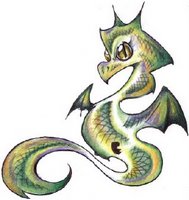
A dragon has moved in under my bed
Its smallish compared to other dragons I have seen
and has purple spots all over
I haven't dared to ask its name yet, but if I work up the courage to do so I will tell you
So far we have pretended not to see each other
And every time he blows a little flame,
we both just roll our eyes and afterwards look up into the ceiling (or in his case, the bottom of my bed) pretending it was just very natural that the bed nearly went on fire.
I am not sure how long we can keep it up like this
xxxx
Aasa
PS: I haven't dared to take a photo of him so you will only get something that almost look like him. Think of him as a mix between the both.
¨¨°º©©º°°º©©º°¨¨¨¨°º©©º°°º©©º°¨¨¨¨°º©©º°°º©©º°¨¨¨¨°º©©º°°º©©º°¨¨
11/22/05
Dragon under my bed
 My dragon was gone for a while.
I don't know if you remember him.
He lived under my bed for nearly a month, didn't even introduce himself,
and then one day all of a sudden, ha was just gone.
I was very puzzled.
So puzzled that I actually forgot to tell it to you.
I actually missed him
Sometimes when he was sleeping I could hear him talk in his sleep
Then he would suddenly make a little growl and blow the tiniest, cutest little flame into the air
One time he burned my toe
After that I slept more carefully and a lot lighter
But the good news is
NOW he is back
I came home today and heard somebody gnawing on something
I am not very familiar with gnawing-sounds coming from my room,
so I entered it with some precaution
There I saw his purple-spotted tail sticking out from under my bed
I must say it was a happy occasion
Maybe I will even try to introduce myself now
¨¨°º©©º°°º©©º°¨¨¨¨°º©©º°°º©©º°¨¨¨¨°º©©º°°º©©º°¨¨¨¨°º©©º°°º©©º°¨¨
1/23/06
Eyolf the dragon
It has been a long time since I told you all anything about the purple-spotted dragon under my bed
 I have managed to find out that his name si Eyolf
He also likes Yogurt with coconut-taste (I know...it sounds disgusting, but it is really good actually) and fudge.
(He eats the ones I put on the floor, even the package around them, but he has never touched the strawberry-flavoured ones)
That's all for now
I will tell you more if I find out more
¨¨°º©©º°°º©©º°¨¨¨¨°º©©º°°º©©º°¨¨¨¨°º©©º°°º©©º°¨¨¨¨°º©©º°°º©©º°¨¨
4/23/06
Eyolf and fudge
I have news about Eyolf, my purple spotted dragon.. ....and they are quite peculiar
 Turns out that somebody else knows Eyolf, probably he lived under their bed, before he came to mine.
And they have even written a book about him
Look!
Now, some of you might claim that "Fudge" is the name of the chimp (or whatever it is, it is not as pretty as Eyolf, so who cares?) on the cover of this book, but that only proves your lack of reality perspective. I am pretty sure the chimp is trying to steal fudge from Eyolf, it must be a book about how they rival for it. I understand them very well.
But Isn't it great?
I want to buy it!
~ Åsa
(a re-post from 2006)
I know it has been a long time since I have told anything about Eyolf, the dragon that lives under my bed. (For you who don't know him, you can scroll down and read the post belove to get to know him better)
This is mainly because there has not been much to tell, we have
 been living harmoniously together for a long time now
He doesn't make much of himself, when I am there he either sleeps or sneak reads Harry Potter books. When I am not there he goes for a flying trip or steals fudge from my closet.
But now I have some news....and they are quite shocking.
I was talking to this Norwegian guy, who showed a lot of interest in Eyolf.
And after I had answered several questions about him, he offered to buy him.
Normally I would not have been interested at all, I would have been shocked and appalled.
The reasons being that:
1: He is not mine
2: I am stupid with money and in general I don't like it that much, I choose more or less to pretend that it doesn't exist.
3: Selling a dragon? I am not even sure if I am allowed to import him to Norway.
Where do they stand on dragon import? Has it changed since they entered the Schengen agreement?
4: Its not very nice - neither to him or the dragon, he can be quite moody. (the dragon I mean, the guy I don't know about)
So, these were my reasons, but then he mentioned the price.
He offered me 2000 hugs, an offer that I find very tempting.
It is like telling an alcoholic he will have booze for life.
So......do you my readers have any suggestions about what I should do?
~ Åsa
PS: I submitted the earlier posts I made about Eyolf for those of you who don't know him from before.
¨¨°º©©º°°º©©º°¨¨¨¨°º©©º°°º©©º°¨¨¨¨°º©©º°°º©©º°¨¨¨¨°º©©º°°º©©º°¨¨
11/6/05
Purple spotted dragon
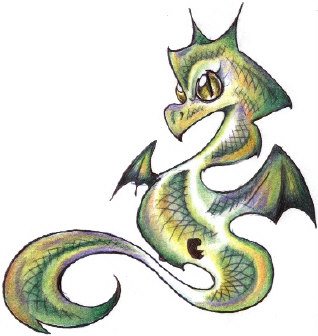
A dragon has moved in under my bed
Its smallish compared to other dragons I have seen
and has purple spots all over
I haven't dared to ask its name yet, but if I work up the courage to do so I will tell you
So far we have pretended not to see each other
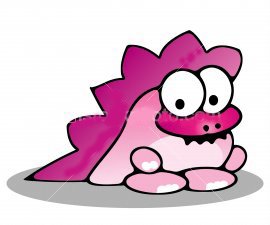
And every time he blows a little flame,
we both just roll our eyes and afterwards look up into the ceiling (or in his case, the bottom of my bed) pretending it was just very natural that the bed nearly went on fire.
I am not sure how long we can keep it up like this
xxxx
Aasa
PS: I haven't dared to take a photo of him so you will only get something that almost look like him. Think of him as a mix between the both.
¨¨°º©©º°°º©©º°¨¨¨¨°º©©º°°º©©º°¨¨¨¨°º©©º°°º©©º°¨¨¨¨°º©©º°°º©©º°¨¨
11/22/05
Dragon under my bed
 My dragon was gone for a while.
I don't know if you remember him.
He lived under my bed for nearly a month, didn't even introduce himself,
and then one day all of a sudden, ha was just gone.
I was very puzzled.
So puzzled that I actually forgot to tell it to you.
I actually missed him
Sometimes when he was sleeping I could hear him talk in his sleep
Then he would suddenly make a little growl and blow the tiniest, cutest little flame into the air
One time he burned my toe
After that I slept more carefully and a lot lighter
But the good news is
NOW he is back
I came home today and heard somebody gnawing on something
I am not very familiar with gnawing-sounds coming from my room,
so I entered it with some precaution
There I saw his purple-spotted tail sticking out from under my bed
I must say it was a happy occasion
Maybe I will even try to introduce myself now
¨¨°º©©º°°º©©º°¨¨¨¨°º©©º°°º©©º°¨¨¨¨°º©©º°°º©©º°¨¨¨¨°º©©º°°º©©º°¨¨
1/23/06
Eyolf the dragon
It has been a long time since I told you all anything about the purple-spotted dragon under my bed
 I have managed to find out that his name si Eyolf
He also likes Yogurt with coconut-taste (I know...it sounds disgusting, but it is really good actually) and fudge.
(He eats the ones I put on the floor, even the package around them, but he has never touched the strawberry-flavoured ones)
That's all for now
I will tell you more if I find out more
¨¨°º©©º°°º©©º°¨¨¨¨°º©©º°°º©©º°¨¨¨¨°º©©º°°º©©º°¨¨¨¨°º©©º°°º©©º°¨¨
4/23/06
Eyolf and fudge
I have news about Eyolf, my purple spotted dragon.. ....and they are quite peculiar
 Turns out that somebody else knows Eyolf, probably he lived under their bed, before he came to mine.
And they have even written a book about him
Look!
Now, some of you might claim that "Fudge" is the name of the chimp (or whatever it is, it is not as pretty as Eyolf, so who cares?) on the cover of this book, but that only proves your lack of reality perspective. I am pretty sure the chimp is trying to steal fudge from Eyolf, it must be a book about how they rival for it. I understand them very well.
But Isn't it great?
I want to buy it!
~ Åsa
Wednesday, November 09, 2011
Smart post title
Hmmmmmmm
Blah blah blah
Some silly words
A picture or drawing for illustration
some more blah blah
A little more blah
some interesting words
more interesting sentences (maybe some that will make you think a littel extra)
some words trying to be insightful
or trying to understand something
more blah blah
Some quotes or references to a philosopher or psychologist / other
blah blah
some wishes and positive salutations to the people reading this blog and the people I know
...
more positive stuff
...
something to inspire you and make you feel good
a PS
a little extra blah blah
...
a hug or something similar
xxx
My name
Blah blah blah
Some silly words
A picture or drawing for illustration
some more blah blah
A little more blah
some interesting words
more interesting sentences (maybe some that will make you think a littel extra)
some words trying to be insightful
or trying to understand something
more blah blah
Some quotes or references to a philosopher or psychologist / other
blah blah
some wishes and positive salutations to the people reading this blog and the people I know
...
more positive stuff
...
something to inspire you and make you feel good
a PS
a little extra blah blah
...
a hug or something similar
xxx
My name
Friday, November 04, 2011
This is from the book "The Prophet" by Kahlil Gibran
In my opinion, one of the most beautiful books ever written
On Love
Then said Almitra, "Speak to us of Love."
And he raised his head and looked upon the people, and there fell a stillness upon them. And with a great voice he said:
When love beckons to you follow him,
Though his ways are hard and steep.
And when his wings enfold you yield to him,
Though the sword hidden among his pinions may wound you.
And when he speaks to you believe in him,
Though his voice may shatter your dreams as the north wind lays waste the garden.
For even as love crowns you so shall he crucify you. Even as he is for your growth so is he for your pruning.
Even as he ascends to your height and caresses your tenderest branches that quiver in the sun,
So shall he descend to your roots and shake them in their clinging to the earth.
Like sheaves of corn he gathers you unto himself.
He threshes you to make you naked.
He sifts you to free you from your husks.
He grinds you to whiteness.
He kneads you until you are pliant;
And then he assigns you to his sacred fire, that you may become sacred bread for God's sacred feast.
All these things shall love do unto you that you may know the secrets of your heart, and in that knowledge become a fragment of Life's heart.
But if in your fear you would seek only love's peace and love's pleasure,
Then it is better for you that you cover your nakedness and pass out of love's threshing-floor,
Into the seasonless world where you shall laugh, but not all of your laughter, and weep, but not all of your tears.
Love gives naught but itself and takes naught but from itself.
Love possesses not nor would it be possessed;
For love is sufficient unto love.
When you love you should not say, "God is in my heart," but rather, I am in the heart of God."
And think not you can direct the course of love, for love, if it finds you worthy, directs your course.
Love has no other desire but to fulfil itself.
But if you love and must needs have desires, let these be your desires:
To melt and be like a running brook that sings its melody to the night.
To know the pain of too much tenderness.
To be wounded by your own understanding of love;
And to bleed willingly and joyfully.
To wake at dawn with a winged heart and give thanks for another day of loving;
To rest at the noon hour and meditate love's ecstasy;
To return home at eventide with gratitude;
And then to sleep with a prayer for the beloved in your heart and a song of praise upon your lips.
Wednesday, November 02, 2011
The dance of the vounded souls
A re-post from 2006, for new readers to enjoy
-----o--o-o--o-o--O--o-o--o-o--o--------
He was...
a painful sweet taste, a sudden brush of a dreaming wind,
a sight behind shimmering eyelids, and a rush of soft smells to her senses.
He was a flickering picture, water running through her mind.
A thought she yearned to posses, but never wanted to own, never
He was a touch, a distant color yet to be seen, an unopened dream,
a wish, a longing, a desire
to strong to ever be fulfilled.
He was too much,
too far away in her mind
from himself
from her
and she knew it.....again
Love Addiction consists of two components:
Romance and / or Sexual Addiction.
Love addiction is a condition common for many adults that once were abandoned children, emotionally or physically abandoned. It might spread from dependency on only romance or sex, to a mix of both components. What was common for these children was the suffering of not feeling deeply loved and accepted in a healthy way, with a support to reach individuality, strength and selflove from the parent/s. Maybe the parents needed them to much (codependency) or never really saw them. Oftentimes these parents never got the love and support in childhood they needed either, so they didn´t have the foundation to take learning from on how to it to pass it on to their own children. This is no matter how much they even wanted to, or in their own way might have loved their child.
Sex and love addicts often don´t realize their problem or seek help before in total crisis (divorce, painful emotional breakdowns etc) and some times not even then. Normally they will try to get out of crisis through controlling their pattern in their own way. Altering the behavior by being abstinent or trying a new pattern, getting an other form of addiction ect. This is just like the alcoholic swapping beer for wine and will never help anyone in the long run, because the underlying conditions for the addictions will still be there.
As the addicted think they derive some pleasure out of their pattern, they will very often cling to it as much as they can. The state of addiction involves a lot of denial of own feelings, so in the addicted state of mind the addict will likely not be aware of his/her own pattern. They will be tricked by their mind to believe they are perfectly in their right to behave as they do.
If you feel this might apply to you in any way at all, please keep on reading and keep an open mind. It might change your life.
Sex and love addiction can involve many different antics; it may be a strong desire to have sex, masturbate , watch porn. It might be an urge to flirt, have affairs / relations or just create romantic situations and connections. Or it might even be a pattern to fall into romantic situations that always leaves you feel hurt or vounded, always ending up in situations where love brings suffering to you. In one way or another, it involves romance, sex or love in a way that is not healthy for the person, even though they might think so in the stanges of intense pleasure.
All these things are normal for every human, but enters a non-healthy state when the person in fact cannot be without these attachments. (Or drastically goes totally abstinent in a way of trying to control it all) When being alone for a long period of time without these elements is difficult to a stronger degree, and brings up emotions as anxiety and the feeling of withdrawal pangs. Or the reverse - if every time you get involved with someone it also brings with it a lot of anxiety, stress and mixed emotions.
If a person has entered a later state of addiction, his/her behavior might start to get out of control and even to have negative impact on their life quality. Other tasks as work, health or important things that are essential to have a rich, fullworthy life, are set aside to give room for the addition. The addiction takes the main role of that persons life, and this spiral only increases with time. Being a sex and / or love addict means your desires for these things are significantly impinging on your life in a negative way. These feelings and behaviors cause a great deal of shame, hopelessness and confusion for the addict, but at the same time the drive and urge for them are also extremely strong. It creates a feeling of meaning and being alive, because they have not developed a truly healthy relatonship to the self and their own inner reality.
The addicts might often engage in distorted thinking, often rationalizing and justifying their behavior or blaming others for problems. They generally deny they have a problem and make excuses for their actions, which for them might seem perfectly healthy and good. This despite it being an unmanageable problem in the addict's life. The reason might be the that to realize the addiction involves a mayor life change that also threatens the identity that the addicted has built up for her/himself. And it also involves facing the difficult feelings of non-worth and pain that is disguised by the addiction. This becomes very difficut as it includes changing a habit that makes them feel safe and good. As long as they feel good, and get their addiction, they don´t want to change.
Change often comes just when they have reached rock bottom and suffering enters their life at a high level, because of their actions. So it might take might take years and years of addiction and abuse to enter that state of mind, where recovery is wanted.
Sexual addiction might also be associated with risk-taking. In addition to damaging the addict's relationships and interfering with his or her work and "normal" life, a sexual addiction also puts other people and themselves at risk for emotional or physical injury (not using protection during sexual intercourse etc)
These behaviors naturally makes it extremely difficult to work or engage in healthy personal relationships, and normally a love/sex addict has no real feeling of what a healthy relationship is actually based on. They have never gone to the depths or experienced real love and commitment. They were not really given it as a child, and they never learned it as adults. Their way were the made kinda of love, the perverted copy of it. For them love and intimicy is the intensity they feel in connecting with someone else. It is not built slowly up through time, but it coes as a sudden blow, a hit in the meeting with an other addict.
But the first step is facing the addiction, and in that way also starting the path to a healthy life, where loving relations both to the self and others are possible.
Signs and Characteristics of Sex and / or Love Addiction:
# Lack of nurturing and attention when young
# Feeling isolated, detached from parent/s and or family
# Compartmentalization of relationships from other areas of life
# Seek to avoid rejection and abandonment at any cost
# P erceive attraction, attachment, and sex as basic human needs, on a par with food and water
# Insatiable appetite in area of difficulty (sex, love or attachment / need.)
# Inner (conscious/subconscious) rage over lack of nurturing, early abandonment
# Outer facade of "having it all together" to hide internal disintegration
# Mistake intensity for intimacy or love
# Hidden Pain
# Powerlessness over addictive sexual behavior.
# Resulting unmanageability of his/her life.
# Feelings of shame, pain, and self-loathing.
# Failed promises and attempts to stop acting out (seeking the stimuli of romance/sex).
# Preoccupation with sex leading to ritual.
# Tendency to leave one (sexual/romantic)relationship for another.(No real time alone)
# Afraid to trust anyone in a relationship
# Sense of worthlessness without a relationship or partner/s
# Escalating tolerance for high-risk behavior
# Intense need to control self, others, circumstances
# Presence of other addictive or compulsive problems (food, alcohol etc)
# Using others, sex & relationships to alter mood or relieve emotional pain
# Continual questioning of values and lifestyle
# Confusion of sexual attraction with love ("Love" at first sight.)
# Tendency to trade sexual activity for "love" or attachment
# Existence of a secret "double life"
# Refusal to acknowledge existence of problem
# Defining "wants" as "needs"
# Attempts to replace lost relationships/sexual encounters with new ones immediately
-----o--o-o--o-o--O--o-o--o-o--o--------
He was...
a painful sweet taste, a sudden brush of a dreaming wind,
a sight behind shimmering eyelids, and a rush of soft smells to her senses.
He was a flickering picture, water running through her mind.
A thought she yearned to posses, but never wanted to own, never
He was a touch, a distant color yet to be seen, an unopened dream,
a wish, a longing, a desire
to strong to ever be fulfilled.
He was too much,
too far away in her mind
from himself
from her
and she knew it.....again
Love Addiction consists of two components:
Romance and / or Sexual Addiction.
Love addiction is a condition common for many adults that once were abandoned children, emotionally or physically abandoned. It might spread from dependency on only romance or sex, to a mix of both components. What was common for these children was the suffering of not feeling deeply loved and accepted in a healthy way, with a support to reach individuality, strength and selflove from the parent/s. Maybe the parents needed them to much (codependency) or never really saw them. Oftentimes these parents never got the love and support in childhood they needed either, so they didn´t have the foundation to take learning from on how to it to pass it on to their own children. This is no matter how much they even wanted to, or in their own way might have loved their child.
Sex and love addicts often don´t realize their problem or seek help before in total crisis (divorce, painful emotional breakdowns etc) and some times not even then. Normally they will try to get out of crisis through controlling their pattern in their own way. Altering the behavior by being abstinent or trying a new pattern, getting an other form of addiction ect. This is just like the alcoholic swapping beer for wine and will never help anyone in the long run, because the underlying conditions for the addictions will still be there.
As the addicted think they derive some pleasure out of their pattern, they will very often cling to it as much as they can. The state of addiction involves a lot of denial of own feelings, so in the addicted state of mind the addict will likely not be aware of his/her own pattern. They will be tricked by their mind to believe they are perfectly in their right to behave as they do.
If you feel this might apply to you in any way at all, please keep on reading and keep an open mind. It might change your life.
Sex and love addiction can involve many different antics; it may be a strong desire to have sex, masturbate
 , watch porn. It might be an urge to flirt, have affairs / relations or just create romantic situations and connections. Or it might even be a pattern to fall into romantic situations that always leaves you feel hurt or vounded, always ending up in situations where love brings suffering to you. In one way or another, it involves romance, sex or love in a way that is not healthy for the person, even though they might think so in the stanges of intense pleasure.
All these things are normal for every human, but enters a non-healthy state when the person in fact cannot be without these attachments. (Or drastically goes totally abstinent in a way of trying to control it all) When being alone for a long period of time without these elements is difficult to a stronger degree, and brings up emotions as anxiety and the feeling of withdrawal pangs. Or the reverse - if every time you get involved with someone it also brings with it a lot of anxiety, stress and mixed emotions.
If a person has entered a later state of addiction, his/her behavior might start to get out of control and even to have negative impact on their life quality. Other tasks as work, health or important things that are essential to have a rich, fullworthy life, are set aside to give room for the addition. The addiction takes the main role of that persons life, and this spiral only increases with time. Being a sex and / or love addict means your desires for these things are significantly impinging on your life in a negative way. These feelings and behaviors cause a great deal of shame, hopelessness and confusion for the addict, but at the same time the drive and urge for them are also extremely strong. It creates a feeling of meaning and being alive, because they have not developed a truly healthy relatonship to the self and their own inner reality.
The addicts might often engage in distorted thinking, often rationalizing and justifying their behavior or blaming others for problems. They generally deny they have a problem and make excuses for their actions, which for them might seem perfectly healthy and good. This despite it being an unmanageable problem in the addict's life. The reason might be the that to realize the addiction involves a mayor life change that also threatens the identity that the addicted has built up for her/himself. And it also involves facing the difficult feelings of non-worth and pain that is disguised by the addiction. This becomes very difficut as it includes changing a habit that makes them feel safe and good. As long as they feel good, and get their addiction, they don´t want to change.
Change often comes just when they have reached rock bottom and suffering enters their life at a high level, because of their actions. So it might take might take years and years of addiction and abuse to enter that state of mind, where recovery is wanted.
Sexual addiction might also be associated with risk-taking. In addition to damaging the addict's relationships and interfering with his or her work and "normal" life, a sexual addiction also puts other people and themselves at risk for emotional or physical injury (not using protection during sexual intercourse etc)
These behaviors naturally makes it extremely difficult to work or engage in healthy personal relationships, and normally a love/sex addict has no real feeling of what a healthy relationship is actually based on. They have never gone to the depths or experienced real love and commitment. They were not really given it as a child, and they never learned it as adults. Their way were the made kinda of love, the perverted copy of it. For them love and intimicy is the intensity they feel in connecting with someone else. It is not built slowly up through time, but it coes as a sudden blow, a hit in the meeting with an other addict.
But the first step is facing the addiction, and in that way also starting the path to a healthy life, where loving relations both to the self and others are possible.
Signs and Characteristics of Sex and / or Love Addiction:
# Lack of nurturing and attention when young
# Feeling isolated, detached from parent/s and or family
# Compartmentalization of relationships from other areas of life
# Seek to avoid rejection and abandonment at any cost
# P
 erceive attraction, attachment, and sex as basic human needs, on a par with food and water
# Insatiable appetite in area of difficulty (sex, love or attachment / need.)
# Inner (conscious/subconscious) rage over lack of nurturing, early abandonment
# Outer facade of "having it all together" to hide internal disintegration
# Mistake intensity for intimacy or love
# Hidden Pain
# Powerlessness over addictive sexual behavior.
# Resulting unmanageability of his/her life.
# Feelings of shame, pain, and self-loathing.
# Failed promises and attempts to stop acting out (seeking the stimuli of romance/sex).
# Preoccupation with sex leading to ritual.
# Tendency to leave one (sexual/romantic)relationship for another.(No real time alone)
# Afraid to trust anyone in a relationship
# Sense of worthlessness without a relationship or partner/s
# Escalating tolerance for high-risk behavior
# Intense need to control self, others, circumstances
# Presence of other addictive or compulsive problems (food, alcohol etc)
# Using others, sex & relationships to alter mood or relieve emotional pain
# Continual questioning of values and lifestyle
# Confusion of sexual attraction with love ("Love" at first sight.)
# Tendency to trade sexual activity for "love" or attachment
# Existence of a secret "double life"
# Refusal to acknowledge existence of problem
# Defining "wants" as "needs"
# Attempts to replace lost relationships/sexual encounters with new ones immediately
Many of these symptoms are also elements of codependency and intimacy dysfunctions resulting from childhood abandonment, emotional or sexual abuse. For this reason treatment and therapy for Love Addiction often includes trauma recovery work. Read what others have to say about love addiction.
Check yes or no to the self test presented on this page. A high number of yes would indicate romance/sex addiction. Remember that romance can be a delightful part of our love relationships and bring out the best in us. It is when we have become over-identified with this experience that it hurts a person.
-----o--o-o--o-o--O--o-o--o-o--o--------How is sexual/romantic addiction treated?
Most addicts live in denial of their addiction, and treating an addiction is dependent on the person accepting and admitting that he or she has a problem. In many cases, it takes a significant event—such as the loss of a job, the break-up of a marriage, an arrest, or health crisis—to force the addict to admit to his or her problem.
Support groups and 12 step recovery programs for people with addictions (like SLAA; Sex and Love Addicts Anonymous) have been proven very helpful. This program is designed to help the individual come through a recovery process on his own, but at the same time through the support and knowledge of the group. The goal is to stop the self-destructive patterns and find a life that is grounded in healthy living and selflove.
Find an SLAA meeting in your city
The healing of sex/love addiction focuses on controlling the addictive behavior and helping the person develop a healthy sexuality, sense of relating and self. Treatment can also include education about healthy sexuality, individual counseling, and marital and/or family therapy.
Tuesday, November 01, 2011
Co-dependency
 Co-dependency is generally used to describe any self-sacrificing, unhealthy behavior patterns which result from dysfunctional relationships adding more fuel to the dysfunctional relationship patterns. It’s a circular pattern of behavior that is often distructive for all those involved.
They have good intentions; often the very best. They can often try to take care of a person who is experiencing difficulty, but the care-taking can become compulsive and defeating. Co-dependents often take on a martyr’s role and become “benefactors” to an individual in need.
The problem is that these repeated rescue attempts allow the needy individual to continue on a destructive course and to become even more dependent on the unhealthy caretaking of the “benefactor.” As this reliance increases, the co-dependent develops a subconscious sense of reward and satisfaction from “being needed.” When the caretaking becomes compulsive, the co-dependent feels choiceless and helpless in the relationship, but is unable to break away from the cycle of behavior that causes it. Co-dependents often view themselves as victims and are attracted to that same weakness in the love and friendship relationships.
Characteristics of Co-dependent People Are:
 -An exaggerated sense of responsibility for the actions of others
-A tendency to confuse love with the feelings of pity
This condition appears to run in different degrees, whereby the intensity of symptoms are on a spectrum of severity, as opposed to an all or nothing scale. Please note that only a qualified professional can make a diagnosis of co-dependency; not everyone experiencing these symptoms suffers from co-dependency.
1. Do you keep quiet to avoid arguments?
2. Are you very worried about others’ opinions of you?
3. Have you ever lived with someone with an alcohol or drug problem or who hits or belittles you?
4. Have you ever lived with someone or stayed in a relationship that was not good for your overall mental health?
5. Do you often feel that the opinions of others more important than your own?
6. Do you have difficulty adjusting to changes in your life?
7. Do you feel rejected when significant others spend time apart from you?
8. Do you doubt your ability to be who you want to be?
9. Are you uncomfortable expressing your true feelings to others?
10. Have you ever felt inadequate?
11. Do you feel like a “bad person” when you make a mistake?
12. Do you have difficulty taking compliments or gifts?
13. Do you feel humiliation when a close one makes a mistake?
14. Do you think people in your life would go downhill without your constant efforts?
15. Do you frequently wish someone could help you get things done?
16. Do you have difficulty talking or relating naturally to people in authority?
17. Are you confused about who you are or where you are going with your life?
18. Do you have trouble saying “no” when asked for help?
19. Do you have trouble asking for help?
20. Do you have so many things going at once that you can’t do justice to any of them?
If you identify with some or several of these symptoms; are dissatisfied with yourself or your relationships; you should consider seeking professional help. Arrange for a diagnostic evaluation with a licensed physician or psychologist experienced in treating co-dependency.
When Co-dependency Hits Home

A lot of change and growth is necessary for the co-dependent and his or her family. Any caretaking behavior that allows or enables abuse to continue in the family needs to be recognized and stopped. The co-dependent must identify and embrace his or her feelings and needs. This may include learning to say “no,” to be loving yet tough, and learning to be self-reliant. People find freedom, love, and serenity in their recovery.
So, yes, hope lies in learning and understanding more. The more you understand co-dependency the better you can cope with its effects. Reaching out for information and assistance can help someone live a healthier, more fulfilling life.
 Rather than allowing others to own their own reactions to situations, we believe they should respond in a way defined (and usually desired) by us. In many situations this isn’t necessarily “evil” control, but actually stems out of good wishes and wanting the best for others. It is just very misunderstood. Many of us want our family members to be happy and satisfied with life. We desire love and nurturing relationships. We want our bosses to approve of us and like us. None of these desires are wrong unless they get in the way of living life in an honest way where we are feeling responsible for other people.
Or the difference in
"being responsible for others and being responsible to others"
OBS: This artickle concentrates on the side of codependance where the selfasteem is low, and the codependent feels needed by others. A typical codependent reaction is also the total opposite, to feel more vaulable than others and that nobody should need them. You can read up on this by text of Pia Malody
OBS: This artickle concentrates on the side of codependance where the selfasteem is low, and the codependent feels needed by others. A typical codependent reaction is also the total opposite, to feel more vaulable than others and that nobody should need them. You can read up on this by text of Pia Malody
Let us embrace and own the idea that having healthy relationships in our lives is important. As a result, we nee
d to make sure we bring our best we can be to the relationship process. What does it mean to be our best? To understand this idea we need to begin to understand the difference in between being re
sponsible for others and being responsible to others in our lives.
More recently, “co-dependency” has been adapted to help describe the behaviors present in any dysfunctional relationship where one person sacrifices “self” in the hopes of satisfying their needs of feeling wanted, desired, loved, valued, etc. These behaviors are often rooted in the upbringing in a dysfunctional family, where abuse (emotional, spiritual, physical or sexual) is present.
Co-dependency is generally used to describe any self-sacrificing, unhealthy behavior patterns which result from dysfunctional relationships adding more fuel to the dysfunctional relationship patterns. It’s a circular pattern of behavior that is often distructive for all those involved.So, in other words, co-dependency can be defined as the tendency to put others needs before your own. You accommodate to others to such a degree that you tend to discount or ignore your own feelings, desires and basic needs. Your self-esteem depends largely o
n how well you please, take care of and/or solve problems for someone else (or many others). In other words, it is the denial or repression of the real self. It is based on the wrong belief that love, acceptance, security, success, closeness and salvation are all dependent upon one's ability to do "the right thing." In the process, the co-dependent denies who she or he really is. Once addicted, the codependent becomes blind to the reality of their own behavior and to their own self-worth.
They have good intentions; often the very best. They can often try to take care of a person who is experiencing difficulty, but the care-taking can become compulsive and defeating. Co-dependents often take on a martyr’s role and become “benefactors” to an individual in need.
The problem is that these repeated rescue attempts allow the needy individual to continue on a destructive course and to become even more dependent on the unhealthy caretaking of the “benefactor.” As this reliance increases, the co-dependent develops a subconscious sense of reward and satisfaction from “being needed.” When the caretaking becomes compulsive, the co-dependent feels choiceless and helpless in the relationship, but is unable to break away from the cycle of behavior that causes it. Co-dependents often view themselves as victims and are attracted to that same weakness in the love and friendship relationships.
Here are some unconscious deeper feelings that co-dependents often struggle with:
1. If someone important to me expects me to do something, I should do it.
2. I should not be irritable or unpleasant.
3. I shouldn't do anything to make others angry at me.
4. I should keep people I love happy.
5. It's usually my fault if someone I care about is upset with me.
6. I obtain self-esteem out of helping others solve their problems.
7. I tend to overextend myself in taking care of others.
8. If necessary, I put my own values or needs aside in order to preserve my relationship with my significant other
9. I have a hard time receiving things from others.
10. Fear of someone else's anger has a lot of influence on what I say or do.
The consequences of maintaining a co-dependent approach to life is a lot of resentment, frustration and unmet personal needs. When these feelings and needs remain unconscious, they often resurface as anxiety -- especially chronic, generalized anxiety or depression. The long-term effects of co-dependency are enduring stress, fatigue, burnout and eventually serious physical illness.
Characteristics of Co-dependent People Are:
 -An exaggerated sense of responsibility for the actions of others
-A tendency to confuse love with the feelings of pity
or guilt
-A tendency to do more than their share, all of the time
-A tendency to become hurt when people
-A tendency to do more than their share, all of the time
-A tendency to become hurt when people
don’t recognize their efforts
-An unhealthy dependence on relationships. The co-dependent will do anything to hold on to a (often destructive) relationship; to avoid the feeling of abandonment, even though the relationship is bad for them
-An extreme need for approval and recognition
-A sense of guilt when asserting themselves
-A compelling need to (passively) control others
-Lack of trust in self and/or others
-Fear of being abandoned or alone
-Difficulty identifying feelings
-Rigidity/difficulty adjusting to change
-Problems with intimacy/boundaries
-Chronic (subconscious) anger
-Sometimes poor communication in relationships
-Difficulty making decisions
Questionnaire To Identify Signs Of Co-dependency
-An unhealthy dependence on relationships. The co-dependent will do anything to hold on to a (often destructive) relationship; to avoid the feeling of abandonment, even though the relationship is bad for them
-An extreme need for approval and recognition
-A sense of guilt when asserting themselves
-A compelling need to (passively) control others
-Lack of trust in self and/or others
-Fear of being abandoned or alone
-Difficulty identifying feelings
-Rigidity/difficulty adjusting to change
-Problems with intimacy/boundaries
-Chronic (subconscious) anger
-Sometimes poor communication in relationships
-Difficulty making decisions
Questionnaire To Identify Signs Of Co-dependency
This condition appears to run in different degrees, whereby the intensity of symptoms are on a spectrum of severity, as opposed to an all or nothing scale. Please note that only a qualified professional can make a diagnosis of co-dependency; not everyone experiencing these symptoms suffers from co-dependency.
1. Do you keep quiet to avoid arguments?
2. Are you very worried about others’ opinions of you?
3. Have you ever lived with someone with an alcohol or drug problem or who hits or belittles you?
4. Have you ever lived with someone or stayed in a relationship that was not good for your overall mental health?
5. Do you often feel that the opinions of others more important than your own?
6. Do you have difficulty adjusting to changes in your life?
7. Do you feel rejected when significant others spend time apart from you?
8. Do you doubt your ability to be who you want to be?
9. Are you uncomfortable expressing your true feelings to others?
10. Have you ever felt inadequate?
11. Do you feel like a “bad person” when you make a mistake?
12. Do you have difficulty taking compliments or gifts?
13. Do you feel humiliation when a close one makes a mistake?
14. Do you think people in your life would go downhill without your constant efforts?
15. Do you frequently wish someone could help you get things done?
16. Do you have difficulty talking or relating naturally to people in authority?
17. Are you confused about who you are or where you are going with your life?
18. Do you have trouble saying “no” when asked for help?
19. Do you have trouble asking for help?
20. Do you have so many things going at once that you can’t do justice to any of them?
If you identify with some or several of these symptoms; are dissatisfied with yourself or your relationships; you should consider seeking professional help. Arrange for a diagnostic evaluation with a licensed physician or psychologist experienced in treating co-dependency.
When Co-dependency Hits Home
Recovery and treatment
So what is really the difference in being responsible to others instead of being responsible for others in our lives? To understand that we need to understand both ourselves and our close relationships better.
The first step in changing unhealthy behavior is to understand it. It is important for co-dependents and their family members to educate themselves about the course and cycle of addiction and how it extends into their relationships.
A lot of change and growth is necessary for the co-dependent and his or her family. Any caretaking behavior that allows or enables abuse to continue in the family needs to be recognized and stopped. The co-dependent must identify and embrace his or her feelings and needs. This may include learning to say “no,” to be loving yet tough, and learning to be self-reliant. People find freedom, love, and serenity in their recovery.
So, yes, hope lies in learning and understanding more. The more you understand co-dependency the better you can cope with its effects. Reaching out for information and assistance can help someone live a healthier, more fulfilling life.
Everyone carries some baggage from their life’s journey. We can see that we are all lugging around some different sized loads – but we all have a load to bear. It is irresponsible for anyone to try and dump their baggage on someone else and equally irresponsible for us to carry someone else’s. It is important that we all carry our own load. (We all have baggage – we just need to learn how to carry it gracefully.)
With this baggage carrying analogy, we can see that if someone is trying to carry the load of another the weight becomes unbearable for one (he/she has been dumped on) and the other person is experiencing unbridled freedom – no worries. This isn’t good for either person.
Everyone has their own baggage or burdens to live through and carry. Life is just that way. Things happen on an everyday basis – we all must experience, learn and (hopefully) grow through these experiences, thus becoming more graceful at carrying our own burdens. If we try to carry this baggage for another, then we are depriving the person of experiencing his/her life. We are getting in the way of the lessons that are being introduced to them. We are feeling responsible for their life – for their happiness – for their success – even for their failures.
The same can be said if we try and get others to carry our life’s baggage. If we keep handing it off and not dealing with it ourselves then we are expecting someone else to be responsible for our lives. We are giving up our power. We will miss out on all of the opportunities we are presented to experience, learn and grow as a person. We will never learn how to gracefully walk with our burdens – our baggage. We are not being responsible for ourselves or our life.
Instead, it is a much more healthy approach to living if we consider ourselves responsible to other people rather than being responsible for other people. Sometimes life dumps a trunk on us and we need genuine help to carry it. It is far too heavy to carry alone. These are times in life that are extra heavy, extra difficult, extra trying. In these cases we are all responsible to ask for help and those of us who are able would be loving and supportive to help during those times of trial – ie. illness, death, divorce, natural disaster, abuse, war, etc. These times call for assistance – a temporary sharing of the load that someone has experienced in their life. To help the person struggling is to be responsible to them - we are there to help, supporting others during difficult times of trial and pain. We are assisting, not trying to carry or control the burden alone. We are helping out for a while until such time as the trial is lifted.
One of the most commonly identifiable behaviors/attitudes in co-dependency is that of trying to control our environment (namely relationships) to satisfy our deep need of wanting to be loved. Have you ever found yourself saying things like:
- “If I was good enough, strive to make and be my very best he/she would love me.”
- “If I don’t do it, the job won’t get done or won’t be done right and people will be disappointed in me.”
- “If I volunteer more, I will be liked and respected.”
- “I know so much through my experiences, it is my responsibility to pass on this information to everyone whether they think it is important information or not.”
- “If I do things perfectly, I feel safe, and people will respect me.”
- “My spouse/significant other will always be happy if I just behave in a certain way and/or provide for their every need.”
- “If we pretend that the abuse or wrongdoing isn’t happening, things will work out okay"
- “If I can just avoid saying anything confrontational, but just make a even better effort in fixing things, then they might be fine in the end.”
- "I need to give 120% - one hundred percent of myself all the time.”
- “A job worth doing, is worth doing perfectly.”
- “If I feel guilty, I must have done something wrong, so I need to do anything in my power to fix it"
All of these statements suggest a strong issue of co-dependency. Here we are trying to carry someone’s baggage rather than letting them carry it themselves. It is a place where our boundaries blend in too closely with those boundaries of our family members, friends and loved ones. They all suggest passively having control over other peoples’ opinions, thoughts and feelings – being responsible for others. If we have co-dependant attitudes/behaviors, deeper down we believe that we are influential of all the circumstances – we are able to “make" someone happy, sad, angry, furious, out of control, elated, content…the list goes on and on. With co-dependant behaviors/attitudes come the belief that through our actions we control how all other people see us, value us, and respond to us. This is a recipe for disaster.
Rather than allowing others to own their own reactions to situations, we believe they should respond in a way defined (and usually desired) by us. In many situations this isn’t necessarily “evil” control, but actually stems out of good wishes and wanting the best for others. It is just very misunderstood. Many of us want our family members to be happy and satisfied with life. We desire love and nurturing relationships. We want our bosses to approve of us and like us. None of these desires are wrong unless they get in the way of living life in an honest way where we are feeling responsible for other people.It is important that we learn to live life in a way that is true to who we fundamentally are and what we believe. To live otherwise is to live in a falseness-of-self that will always come back to haunt us. We can’t “make” anyone feel, act, or be someway they don’t choose to be themselves…that is their choice (not ours) to make. Often times a person can get trapped in this cycle when involved in a relationship where he/she really cares about how the other person feels about him/her.
Remember back to your youth…as a teenager, we often would discover someone and develop a huge crush on him/her. We would wonder what they liked to do and what kind of things happened that resulted in smiles and laughter in their lives…we look for those things that made them tick. Then, we might have tried to emulate this type of person so that the object of our desire would “like us.” Maybe, if we were able to perform perfectly, dress perfectly, behave just so - this person might even fall in love with us.
We did our homework. We discovered what was important to him/her and then snared them in the trap of our charm. Weeks or months later, we possibly discovered that there were things about him/her that we weren’t all that wild about. Maybe we became sick to death of going shopping or having football games on t.v. every Sunday. We may even have tried to change them a bit…maybe bringing up other options for entertainment that were important to us – we encouraged them kindly (or forcefully) to just try and see how wonderful these things could be. We wanted them to change to fit what our real desires were – what was really in our hearts. Instead of respecting that they where who they were and we were who we really were – that person behind the persona of “perfect.”
 Does this scenario sound familiar? Unfortunately, it is all too often the case in relationships – even past our teen years. The passionate infatuation stage wanes and we find ourselves tired of trying to be someone we aren’t and then wanting to have our partner “just love me for who I really am.” We may also attempt this same type of manipulation with our parents or other significant people in our lives. Trying desperately to gain approval, acceptance, love – it just doesn’t work. We cannot (nor should we even try) get people to feel things they do not want to feel – even love. (Sorry Cupid, those arrows really don’t work!)
The best we can hope for and actually what we should be striving toward, is being true to who we are in our hearts. That doesn’t mean to be blindly accepting of our behaviors (both good and bad). But rather to live true to our values, skills, personality, and all those gifts that enrich our personhood. We need to discover, learn and grow in who we are. Then, we bring our “best” self to the table of any and all relationships. If the “object of our desire” isn’t receptive – that may be quite sad (and sometimes devastating) – but it is his/her choice. We shouldn’t try to manipulate this process. It is the best for all involved.
If we think about it logically and remove our personal feelings from the observations, it really makes a lot of sense. If we are respectful of others’ boundaries and desires as well as our own, the result will be good matches rather than manipulated partnerships. Everything will be out on the table with no surprises. We won’t be trying to change anyone and no one will be trying to change us. We will all be living in truth rather than wishing for what “could possibly be if he/she would change.” The result will be an honest connection between people who share common values, beliefs, convictions, interests, etc. Not only will we be loving someone as they are – we will be loved for who and what we are – “loved for being me!”

Subscribe to:
Posts (Atom)